Smart Small House Kitchen Design for Compact Homes
The Importance of Smart Design in Small Kitchens
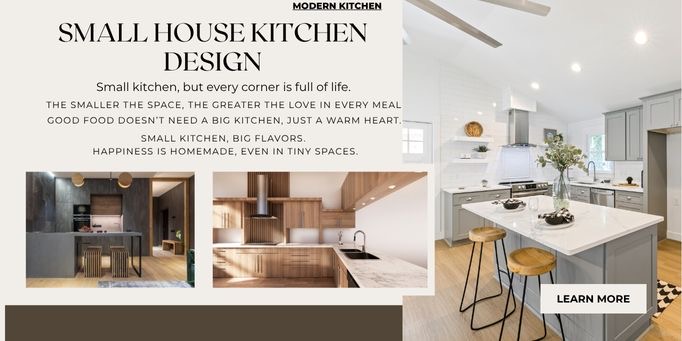
Small house kitchen design is not simply stacking appliances and cabinets into a tiny room. The intention is to have an open-feeling space that is still intimate. To get a kitchen to be efficient, it must be balanced.
Homeowners must look behind the face of their kitchens. It is not merely a matter of having trendy cabinets and up-to-date fixtures. It is also a matter of how they are positioned. A well-planned small house kitchen design can make the space appear large, light, and welcoming.
Choosing the Right Layout for Your Space
Layout is where everything comes together in a kitchen. It is essential for small houses, as it defines efficiency.
Here’s a breakdown of the most common small kitchen layouts and their benefits:
| Layout Type | Best For | Key Advantages |
| One-Wall Kitchen | Studio apartments or narrow spaces | Saves floor space and keeps everything accessible on one side |
| Galley Kitchen | Long, narrow rooms | Provides efficient workflow between two facing counters |
| L-Shaped Kitchen | Open floor plans or corners | Allows more counter space and can open to a dining or living area |
| U-Shaped Kitchen | Slightly larger compact kitchens | Maximizes surface and storage without overcrowding |
When you’re choosing your home plan, think about walking around as you cook. Your “work triangle,” or the distance from your refrigerator, stove, and sink, needs to be open, accessible, and not crowded. A crowded triangle keeps you from staying too long, and from cooking contentedly.
Lighting and Color: The Illusion of Space
If your small house kitchen design receives very little natural light, utilize layered lighting. Ambient lighting works best when mounted on the ceiling, while task lighting under the cabinets ensures functionality. Accent lighting is perfect for illuminating shelves or other decorative items.
You can get your kitchen to look brighter by utilizing shiny cabinets and backsplashes.
Tossing in one contrasting color, i.e., navy to an island or black hardware on white cabinets will bring personality and not overwhelm the space.
Smart Storage Ideas That Truly Work
Quality over quantity is the mantra when it comes to storage in a small kitchen. The trick is to be creative.
You can also utilize vertical space to get the most out of your living space. Store less-used items on top of ceiling-high cabinets. It will make the space seem larger and guide the eye upwards. Pull-out pantry shelves or carousel corner units are an excellent means to convert dead space into storage spaces.
Small things matter. Deep drawers allow easier access to pots and pans. Hooks below shelves for mugs, etc., will save your counter space real estate. Floating open shelving can be utilized to display glassware and greenery.
Choosing Materials That Add Character Without Bulk
Material selection is critical when you are planning a new kitchen.
Consistency is key when it comes to designing flooring. Placing the same flooring in your kitchen, and the around living room, produces an illusion of space. Light-colored vinyl planks or wood are ideal for such an effect.
The matte black or brushed brass faucets are a humble finish that introduces elegance without taking over the space.
Integrating Appliances Seamlessly
The scariest aspect of designing a kitchen for a small home are the appliances.
Save space with multi-purpose appliances and stackable appliances, such as a microwave convection oven or skinny fridge. Hanging refrigerators and ovens also serve as space savers.
Use the sink for more than one purpose. Put in deep sinks that have built-in drying racks and cutting boards. This utilitarian idea optimizes function without sacrificing counter space.
Design Details That Make a Big Difference
Now that the basics are covered, it’s time to introduce some details. Small kitchens can feel cramped or warm depending on these details.
Reflections and mirrors can produce an illusion of more space. Clutter will make a small kitchen feel even smaller. Glass fronted cabinets and open shelving bring depth in but let your personality be the show.
You may also provide additional seating or storage space in your kitchen with a smaller breakfast bar, if space permits. Scale is secondary to balance in small spaces.
Simple Design Rules for a Spacious Feel
These old-fashioned design principles apply to most small U.S. houses:
In order to have visual unity, you must restrict your color scheme no further than to two or three colors.
- Keep the color palette limited to two or three shades for visual consistency.
- Prioritize functionality before aesthetics — every item should earn its place.
- Choose slim, vertical hardware and tall upper cabinets to stretch the room visually.
Common Mistakes to Avoid
If you do not respect simple rules, even the best small house kitchen design layouts won’t work. Avoid placing heavy furniture or large appliances that restrict movement, and don’t combine too many textures or finishes. Simplicity is the key to making a tiny kitchen feel open and balanced.
Bad lighting is also a common error. In order to prepare food easily and safely, invest in quality light fittings.
Planning has to be done. Installing without proper measurement will make your kitchen inefficient.
Personalizing Your Kitchen
Personalize your small kitchen. Add some personality and warmth to the kitchen with small touches. Plants or herbs can add a freshness to a space.
It is equally essential that one balances personalizing and functionality in the limited space. This will make more room available but will be adaptable as well.
A Real-Life Example
Imagine an American 10×10 bungalow kitchen. The homeowners decide to go with an L shaped design. They assign one wall for tall cabinets and the other to the stove, sink, and prep area. They select white shaker cabinets and black matte hardware for contrast. Their backsplash is glossy subway tiles which reflect light tastefully.
A pendant above the sink brings some personality. The microwave was discreetly hidden within a built-in cabinet. There is a panelled top on the fridge. Wooden shelves will be used to hold plants or decorations.
Bringing Everything Together
A successful small kitchen layout is one that is tailored both to your lifestyle and also your available space. This layout unites smart layouts, good storage, excellent lighting, and your own draw in a balancing scheme. Every detail influences the appearance and personality of the kitchen, from cabinet finish and height, to handle finishes.
Small kitchens are full of potential but short on square footage. The ideal kitchen to entertain friends or prepare a meal for your family is a spacious and efficient kitchen.